


Goodman 4 Ton Package Unit Air Conditioning Cooling Only With Electric Heating | 13.4 SEER2 | Horizontal | R32
Free Shipping over $1,500

Goodman 5 Ton Package Unit Heat Pump & AC | 13.4 SEER2 Horizontal Discharge | R32
Free Shipping over $1,500

Goodman 2 Ton Package Unit Air Conditioning Cooling Only With Electric Heating | 13.4 SEER2 | Horizontal| R32
Free Shipping over $1,500

Intertherm 5 Ton 13.4 SEER2 Packaged AC With Electric Heating For Mobile Homes - Horizontal Discharge, R454B
Free Shipping over $1,500

Goodman 3.5 Ton Package Unit Gas / Electric AC - 81% Efficiency 80000 BTU | 13.4 SEER2 Multi-Positional | R32
Free Shipping over $1,500

Goodman 5 Ton Package Unit Gas / Electric AC - 81% Efficiency 120000 BTU | 13.4 SEER2 Multi-Positional | R32
Free Shipping over $1,500

Goodman 4 Ton Package Unit Gas / Electric AC - 81% Efficiency 80000 BTU | 13.4 SEER2 Multi-Positional | R32
Free Shipping over $1,500

Goodman 3 Ton Package Unit Gas / Electric AC - 81% Efficiency 60000 BTU | 13.4 SEER2 Multi-Positional | R32
Free Shipping over $1,500
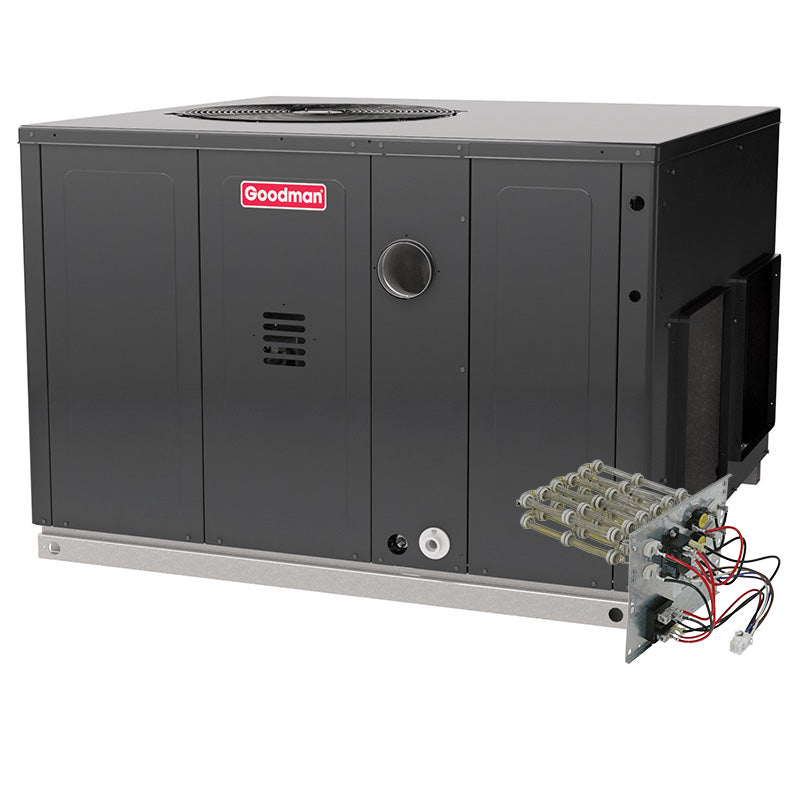
Goodman 5 Ton Package Unit Heat Pump & AC | 13.4 SEER2 Multi-Positional | R32
Free Shipping over $1,500

Goodman 4 Ton Package Unit Heat Pump & AC | 13.4 SEER2 Multi-Positional | R32
Free Shipping over $1,500

Goodman 2 Ton Package Unit Heat Pump & AC | 13.4 SEER2 Multi-Positional | R32
Free Shipping over $1,500

Goodman 2.5 Ton Package Unit Cooling Only Air Conditioning | 13.4 SEER2 | Horizontal | R32
Free Shipping over $1,500
Self Contained Package Units
Package Unit Air Conditioners: Self-Contained AC and Heating from 1.5 to 5 Ton
A package unit air conditioner is a self-contained system that houses the compressor, condenser, evaporator coil, and blower in one outdoor cabinet, with no indoor unit required. Supply and return ductwork connect through the exterior wall or roof directly to the cabinet outside. These packaged air conditioning units are the standard solution for homes on elevated crawl spaces, rooftop installations, and anywhere installing a split system's indoor component is not practical.
When every component is in one cabinet outside the home, installation is faster, maintenance is simpler, and no indoor mechanical space is required. Shoppers searching for a package unit HVAC system, an HVAC packaged unit, or a package unit AC will find every configuration here, including straight cool, heat pump, gas heat, and electric heat, from Goodman, Direct Comfort, and Revolv, with free shipping on orders over $1,500, a 10-year factory-backed warranty, and a 125% low price guarantee on Goodman and Direct Comfort products.
Whether you are replacing an existing system on a concrete pad or specifying a new rooftop installation, the selection below covers every configuration, every tonnage from 1.5 to 5 tons, and every climate requirement.
What Is a Self-Contained Package Unit?
In a packaged heating and cooling unit, all the components a split system places in two locations are consolidated into one outdoor cabinet. Warm air from inside the home is drawn through return ductwork into the unit, cooled across the evaporator coil, and pushed back through supply ducts into the living space. The heat extracted from the air is expelled through the condenser to the outside. The entire refrigerant cycle happens in a single cabinet sitting on a pad or rooftop mount.
Heating is integrated into the same cabinet, either electric heat strips, a gas furnace section, or a reversible heat pump circuit, depending on the configuration you choose. The result is a complete year-round climate control system maintained from one location, with no furnace closet, no attic air handler, and no refrigerant lines running between two buildings.
The Right Home for a Package AC Unit
Package units are not a generic alternative to split systems. They are the purpose-built solution for specific structural situations where a split system creates a practical problem.
- Crawl space homes: The most common residential use. Supply and return ducts run beneath the floor, and the packaged air conditioner, sometimes referred to as aircon boxes for their all-in-one cabinet design, sits on a grade-level pad beside the home, connecting through the floor system or a low exterior wall opening.
- Rooftop installations: Commercial buildings and flat-roof residential structures mount the unit on the roof, with ductwork penetrating through the roof deck. All service access is at the rooftop.
- Direct replacements: The fastest upgrade path. The pad, electrical service, and duct connection are already in place. The new unit drops in and connects to the existing infrastructure.
- Exterior mechanical closets: Slab-foundation homes where ductwork exits through an exterior wall, and there is no viable indoor space for a split system air handler or furnace.
- Mobile homes: Mobile home-rated package units are a separate HUD-certified category. Browse mobile home package units for Revolv and manufactured home-specific configurations.
If your home uses a split system with a separate indoor unit, a split system replacement is usually the better path. See straight cool split systems or heat pump split systems for those configurations. Not sure which applies to your home? Read Package Unit vs. Split System.
Four Configurations to Match Every Climate
AC Direct stocks air conditioning package units in all four heating configurations. Whether you are searching for a package units HVAC replacement or selecting a new system from scratch, the right choice depends on your climate and existing heating infrastructure.
Straight Cool
Cooling only, no integrated heating. The simplest and lowest-cost configuration, suited to climates where winter heating is already handled by a separate gas furnace, boiler, or radiant system, or in regions mild enough that supplemental heat is rarely needed. Electric heat strips can be added to many straight cool package units at or after installation.
Heat Pump
A reversible refrigerant circuit provides both summer cooling and winter heating from the same cabinet. Heat pump package units are the most energy-efficient all-in-one option for mild to moderate climates, moving two to three units of thermal energy for every unit of electricity consumed. Electric backup strips engage automatically when outdoor temperatures drop below the heat pump's effective range, typically around 30 degrees Fahrenheit.
Gas Heat
A straight cool air conditioner paired with an integrated natural gas or propane furnace section in the same outdoor cabinet. Delivers the most powerful and cost-effective heating in climates with significant winter demand and access to a gas line. The most popular configuration is in the Southeast, parts of the Midwest, and anywhere with strong seasonal heating needs.
Electric Heat
A straight cool air conditioner with electric resistance strips for heating. Best suited to extreme southern climates where winter heating demand is minimal, South Florida, South Texas, coastal California, and the cost of running resistance heat for a few weeks per year is acceptable. For climates with meaningful heating seasons, heat pump or gas heat configurations deliver significantly lower annual operating costs.
Goodman, Direct Comfort, and Revolv
Goodman
The most widely installed residential HVAC brand in the United States. Goodman package units span all four configuration types from 2 to 5 tons, with SEER2 ratings from 14 to 16 and AFUE up to 81% on gas heat models. Covered by AC Direct's 125% low price guarantee and a 10-year parts and compressor warranty when registered by a licensed contractor. Goodman's nationwide service network means parts are available through virtually any HVAC supplier in the country.
Direct Comfort
Goodman's direct-distribution brand shares the same engineering platform and warranty terms at factory-direct pricing. Direct Comfort is also covered by the 125% low price guarantee. For buyers who want Goodman-quality performance at the most competitive equipment price, Direct Comfort is the choice.
Revolv
Purpose-built for mobile and manufactured homes, meeting HUD Manufactured Home Construction and Safety Standards. If you are replacing a package unit in a mobile home, Revolv is the correct brand; standard residential package units do not meet HUD code requirements for manufactured housing. See the mobile home package unit catalog for all Revolv configurations.
Sizing Your Package Unit: Tonnage by Square Footage
Correct tonnage is the most important variable in any packaged air conditioning unit selection. An undersized system runs continuously and cannot hold a set temperature. An oversized unit short-cycles. It cools the air too quickly, shuts off before humidity has been adequately removed, and restarts in rapid bursts that accelerate compressor wear and leave the home feeling damp and uncomfortable.
|
System Size |
Well-Insulated Home |
Average Home |
Typical Application |
|---|---|---|---|
|
1.5 Ton |
600-900 sq ft |
500-750 sq ft |
Small home or single zone |
|
2 Ton |
900-1,200 sq ft |
750-1,000 sq ft |
Small to mid-size home |
|
2.5 Ton |
1,200-1,500 sq ft |
1,000-1,250 sq ft |
Standard single-story home |
|
3 Ton |
1,500-1,800 sq ft |
1,250-1,500 sq ft |
Most common size for crawl space homes |
|
3.5 Ton |
1,800-2,200 sq ft |
1,500-1,800 sq ft |
Larger single-story or two-story home |
|
4 Ton |
2,200-2,600 sq ft |
1,800-2,200 sq ft |
Large home or light commercial |
|
5 Ton |
2,600-3,200 sq ft |
2,200-2,800 sq ft |
Large home or small commercial space |
Figures assume 8-foot ceilings and a moderate climate. Homes in high-heat climate zones or with poor insulation should size up one step. In cold climates with gas heat, size the cooling load first. The furnace section is typically sized independently.
Use the AC sizing calculator for a climate-adjusted tonnage recommendation before purchasing.
SEER2 and AFUE: Reading the Efficiency Labels
Every packaged air conditioner in this catalog carries a SEER2 rating for cooling efficiency. The federal minimum is 14 SEER2. The systems here range from 14 to 16 SEER2. The gap between those two numbers represents a real operating cost difference that compounds over 15-20 years, particularly in climates where the cooling season runs five months or longer. If the system runs hard, the premium for a 16 SEER2 unit typically pays back within 3-5 years.
Gas heat configurations carry an additional AFUE rating, Annual Fuel Utilization Efficiency, expressing what percentage of gas fuel is converted to usable heat. An 81% AFUE unit wastes 19 cents of every dollar of gas burned as exhaust. In climates where the gas furnace section runs regularly, higher AFUE translates directly to lower winter heating bills. Among the package AC units available here, always check both SEER2 and AFUE when comparing gas heat options side by side.
Installation: What a Package Unit Swap Involves
For a direct replacement on an existing pad, a package unit installation is one of the fastest HVAC jobs available. The technician sets the new unit on the existing concrete pad or rooftop curb, reconnects the supply and return ductwork to the cabinet openings, runs the electrical service, and connects the gas line if applicable. A straightforward crawl space replacement typically takes 4-6 hours.
All installations must be performed by a licensed HVAC contractor. EPA 608 refrigerant certification is required to handle the refrigerant charge. Gas line connections require a licensed plumber or gas fitter in most jurisdictions. Professional installation is required to activate the 10-year factory warranty and to ensure the unit is commissioned correctly for its rated efficiency.
Keeping Your System Running at Full Performance
One of the practical advantages of packaged air conditioners is that everything is in one place outside the home. There is no attic to access, no crawl space air handler to reach. A technician services the entire system from the cabinet at the grade or rooftop level.
- Change or clean the air filter every 30-60 days during active cooling months. The filter access point varies by model, but is always at the return air connection
- Keep 18 inches of clearance around the cabinet on all sides, vegetation, stored items, and debris against the unit restrict airflow and forces the compressor to work harder
- Schedule annual professional maintenance before the cooling season: coil cleaning, refrigerant level check, electrical inspection, and drain verification
- For rooftop units, inspect the roof penetration seals annually and after significant weather events to prevent water infiltration
- Check condensate drainage annually. Standing water at the unit base indicates a blocked drain that, left untreated, can cause coil icing and compressor strain
Frequently Asked Questions
1. What is a package unit, and how is it different from a split system?
A package unit houses every component, compressor, condenser, evaporator coil, and blower in one outdoor cabinet. A split system separates those functions between an indoor air handler or furnace and an outdoor condenser, connected by refrigerant lines. Both deliver comparable cooling performance at the same tonnage and SEER2 rating. The difference is purely in physical configuration and where the equipment lives.
2. What types of package units are available?
Four configurations: straight cool (cooling only), heat pump (cooling and heating from a reversible refrigerant cycle), gas heat (cooling plus an integrated gas furnace section), and electric heat (cooling plus electric resistance strips). The right choice depends on your climate and whether you have gas service at the installation site.
3. What are the main advantages of a self-contained system?
No indoor mechanical footprint, single-location maintenance, and fast installation for direct replacements. Because all components are in one outdoor cabinet, a technician services the entire system without entering the home. For homes already configured for a package unit, where the pad, electrical service, and duct connections are in place, swapping in a new system is significantly faster and less disruptive than converting to a split system.
4. What size do I need?
A 3-ton unit covers most standard crawl space homes in the 1,250-1,500 square foot range with average insulation. Larger homes step up to 3.5, 4, or 5 tons proportionally. In high-heat climates or homes with poor insulation, size up one step from the baseline table estimate. Use the AC Direct sizing calculator for a climate-adjusted recommendation before you purchase.
5. Do these systems work in cold climates?
Yes, with the right configuration. Gas heat models perform in any climate; the furnace section delivers strong output regardless of outdoor temperature. Heat pump models work efficiently in moderate winters but lose output below 30 degrees Fahrenheit, where built-in electric strips provide backup. For climates with sustained sub-freezing periods, a gas heat packaged unit is the more reliable choice.
6. How much do packaged AC units cost?
Equipment pricing at AC Direct ranges from approximately $1,500 to $4,500, depending on tonnage, configuration, and SEER2 rating. Gas heat and heat pump configurations cost more than straight cooling at the same capacity. Installation adds labor costs that vary by region and complexity. For qualified buyers, AC Direct's 0% EZ Pay financing spreads the total project cost over manageable payments.
7. What is inside a packaged air conditioning unit?
Every unit contains a compressor, condenser coil, fan, evaporator coil, and blower motor. Configuration-specific additions include electric heat strips, an integrated gas furnace section with a heat exchanger and a gas valve, or a reversing valve for heat pump operation. All units ship with a factory refrigerant charge, control board, and wiring harness ready for field connection.
8. How long will it last?
A properly installed and maintained system typically delivers 15-20 years of service. The 10-year factory-backed warranty covers parts and the compressor for the first decade. Annual professional maintenance, coil cleaning, refrigerant check, and electrical inspection are the single most impactful factors in reaching the upper end of that lifespan. Units on rooftop installations may see slightly shorter service life due to greater weather exposure.
9. Which brands does AC Direct carry?
Goodman and Direct Comfort cover standard residential and light commercial applications from 2 to 5 tons. Both are backed by AC Direct's 125% low price guarantee. Revolv is stocked specifically for mobile and manufactured homes. It is HUD-certified and engineered to the dimensional and airflow requirements of manufactured housing. Standard residential package units should not be installed in mobile homes.
10. Is a package unit more efficient than a split system?
At the same SEER2 rating, a packaged air conditioner delivers equivalent efficiency to a split system of the same capacity. The practical difference is that premium split systems reach higher SEER2 ceilings, 18 to 20-plus, than most package units, which top out around 16 SEER2. For buyers whose home is already configured for a package unit, the right comparison is between the available package unit efficiency tiers, not between package units and split systems as categories.
Free shipping over $1,500. 125% low price guarantee. 10-year factory warranty. 0% financing.
Browse the full selection above, or explore related categories: straight cool split systems, heat pump split systems, dual fuel hybrid systems, and mobile home package units. Call toll-free at 1-866-862-8922.
Package Unit Air Conditioners: Self-Contained AC and Heating from 1.5 to 5 Ton
A package unit air conditioner is a self-contained system that houses the compressor, condenser, evaporator coil, and blower in one outdoor cabinet, with no indoor unit required. Supply and return ductwork connect through the exterior wall or roof directly to the cabinet outside. These packaged air conditioning units are the standard solution for homes on elevated crawl spaces, rooftop installations, and anywhere installing a split system's indoor component is not practical.
When every component is in one cabinet outside the home, installation is faster, maintenance is simpler, and no indoor mechanical space is required. Shoppers searching for a package unit HVAC system, an HVAC packaged unit, or a package unit AC will find every configuration here, including straight cool, heat pump, gas heat, and electric heat, from Goodman, Direct Comfort, and Revolv, with free shipping on orders over $1,500, a 10-year factory-backed warranty, and a 125% low price guarantee on Goodman and Direct Comfort products.
Whether you are replacing an existing system on a concrete pad or specifying a new rooftop installation, the selection below covers every configuration, every tonnage from 1.5 to 5 tons, and every climate requirement.
What Is a Self-Contained Package Unit?
In a packaged heating and cooling unit, all the components a split system places in two locations are consolidated into one outdoor cabinet. Warm air from inside the home is drawn through return ductwork into the unit, cooled across the evaporator coil, and pushed back through supply ducts into the living space. The heat extracted from the air is expelled through the condenser to the outside. The entire refrigerant cycle happens in a single cabinet sitting on a pad or rooftop mount.
Heating is integrated into the same cabinet, either electric heat strips, a gas furnace section, or a reversible heat pump circuit, depending on the configuration you choose. The result is a complete year-round climate control system maintained from one location, with no furnace closet, no attic air handler, and no refrigerant lines running between two buildings.
The Right Home for a Package AC Unit
Package units are not a generic alternative to split systems. They are the purpose-built solution for specific structural situations where a split system creates a practical problem.
-
Crawl space homes: The most common residential use. Supply and return ducts run beneath the floor, and the packaged air conditioner, sometimes referred to as aircon boxes for their all-in-one cabinet design, sits on a grade-level pad beside the home, connecting through the floor system or a low exterior wall opening.
-
Rooftop installations: Commercial buildings and flat-roof residential structures mount the unit on the roof, with ductwork penetrating through the roof deck. All service access is at the rooftop.
-
Direct replacements: The fastest upgrade path. The pad, electrical service, and duct connection are already in place. The new unit drops in and connects to the existing infrastructure.
-
Exterior mechanical closets: Slab-foundation homes where ductwork exits through an exterior wall, and there is no viable indoor space for a split system air handler or furnace.
-
Mobile homes: Mobile home-rated package units are a separate HUD-certified category. Browse mobile home package units for Revolv and manufactured home-specific configurations.
If your home uses a split system with a separate indoor unit, a split system replacement is usually the better path. See straight cool split systems or heat pump split systems for those configurations. Not sure which applies to your home? Read Package Unit vs. Split System.
Four Configurations to Match Every Climate
AC Direct stocks air conditioning package units in all four heating configurations. Whether you are searching for a package units HVAC replacement or selecting a new system from scratch, the right choice depends on your climate and existing heating infrastructure.
Straight Cool
Cooling only, no integrated heating. The simplest and lowest-cost configuration, suited to climates where winter heating is already handled by a separate gas furnace, boiler, or radiant system, or in regions mild enough that supplemental heat is rarely needed. Electric heat strips can be added to many straight cool package units at or after installation.
Heat Pump
A reversible refrigerant circuit provides both summer cooling and winter heating from the same cabinet. Heat pump package units are the most energy-efficient all-in-one option for mild to moderate climates, moving two to three units of thermal energy for every unit of electricity consumed. Electric backup strips engage automatically when outdoor temperatures drop below the heat pump's effective range, typically around 30 degrees Fahrenheit.
Gas Heat
A straight cool air conditioner paired with an integrated natural gas or propane furnace section in the same outdoor cabinet. Delivers the most powerful and cost-effective heating in climates with significant winter demand and access to a gas line. The most popular configuration is in the Southeast, parts of the Midwest, and anywhere with strong seasonal heating needs.
Electric Heat
A straight cool air conditioner with electric resistance strips for heating. Best suited to extreme southern climates where winter heating demand is minimal, South Florida, South Texas, coastal California, and the cost of running resistance heat for a few weeks per year is acceptable. For climates with meaningful heating seasons, heat pump or gas heat configurations deliver significantly lower annual operating costs.
Goodman, Direct Comfort, and Revolv
Goodman
The most widely installed residential HVAC brand in the United States. Goodman package units span all four configuration types from 2 to 5 tons, with SEER2 ratings from 14 to 16 and AFUE up to 81% on gas heat models. Covered by AC Direct's 125% low price guarantee and a 10-year parts and compressor warranty when registered by a licensed contractor. Goodman's nationwide service network means parts are available through virtually any HVAC supplier in the country.
Direct Comfort
Goodman's direct-distribution brand shares the same engineering platform and warranty terms at factory-direct pricing. Direct Comfort is also covered by the 125% low price guarantee. For buyers who want Goodman-quality performance at the most competitive equipment price, Direct Comfort is the choice.
Revolv
Purpose-built for mobile and manufactured homes, meeting HUD Manufactured Home Construction and Safety Standards. If you are replacing a package unit in a mobile home, Revolv is the correct brand; standard residential package units do not meet HUD code requirements for manufactured housing. See the mobile home package unit catalog for all Revolv configurations.
Sizing Your Package Unit: Tonnage by Square Footage
Correct tonnage is the most important variable in any packaged air conditioning unit selection. An undersized system runs continuously and cannot hold a set temperature. An oversized unit short-cycles. It cools the air too quickly, shuts off before humidity has been adequately removed, and restarts in rapid bursts that accelerate compressor wear and leave the home feeling damp and uncomfortable.
|
System Size |
Well-Insulated Home |
Average Home |
Typical Application |
|---|---|---|---|
|
1.5 Ton |
600-900 sq ft |
500-750 sq ft |
Small home or single zone |
|
2 Ton |
900-1,200 sq ft |
750-1,000 sq ft |
Small to mid-size home |
|
2.5 Ton |
1,200-1,500 sq ft |
1,000-1,250 sq ft |
Standard single-story home |
|
3 Ton |
1,500-1,800 sq ft |
1,250-1,500 sq ft |
Most common size for crawl space homes |
|
3.5 Ton |
1,800-2,200 sq ft |
1,500-1,800 sq ft |
Larger single-story or two-story home |
|
4 Ton |
2,200-2,600 sq ft |
1,800-2,200 sq ft |
Large home or light commercial |
|
5 Ton |
2,600-3,200 sq ft |
2,200-2,800 sq ft |
Large home or small commercial space |
Figures assume 8-foot ceilings and a moderate climate. Homes in high-heat climate zones or with poor insulation should size up one step. In cold climates with gas heat, size the cooling load first. The furnace section is typically sized independently.
Use the AC sizing calculator for a climate-adjusted tonnage recommendation before purchasing.
SEER2 and AFUE: Reading the Efficiency Labels
Every packaged air conditioner in this catalog carries a SEER2 rating for cooling efficiency. The federal minimum is 14 SEER2. The systems here range from 14 to 16 SEER2. The gap between those two numbers represents a real operating cost difference that compounds over 15-20 years, particularly in climates where the cooling season runs five months or longer. If the system runs hard, the premium for a 16 SEER2 unit typically pays back within 3-5 years.
Gas heat configurations carry an additional AFUE rating, Annual Fuel Utilization Efficiency, expressing what percentage of gas fuel is converted to usable heat. An 81% AFUE unit wastes 19 cents of every dollar of gas burned as exhaust. In climates where the gas furnace section runs regularly, higher AFUE translates directly to lower winter heating bills. Among the package AC units available here, always check both SEER2 and AFUE when comparing gas heat options side by side.
Installation: What a Package Unit Swap Involves
For a direct replacement on an existing pad, a package unit installation is one of the fastest HVAC jobs available. The technician sets the new unit on the existing concrete pad or rooftop curb, reconnects the supply and return ductwork to the cabinet openings, runs the electrical service, and connects the gas line if applicable. A straightforward crawl space replacement typically takes 4-6 hours.
All installations must be performed by a licensed HVAC contractor. EPA 608 refrigerant certification is required to handle the refrigerant charge. Gas line connections require a licensed plumber or gas fitter in most jurisdictions. Professional installation is required to activate the 10-year factory warranty and to ensure the unit is commissioned correctly for its rated efficiency.
Keeping Your System Running at Full Performance
One of the practical advantages of packaged air conditioners is that everything is in one place outside the home. There is no attic to access, no crawl space air handler to reach. A technician services the entire system from the cabinet at the grade or rooftop level.
-
Change or clean the air filter every 30-60 days during active cooling months. The filter access point varies by model, but is always at the return air connection
-
Keep 18 inches of clearance around the cabinet on all sides, vegetation, stored items, and debris against the unit restrict airflow and forces the compressor to work harder
-
Schedule annual professional maintenance before the cooling season: coil cleaning, refrigerant level check, electrical inspection, and drain verification
-
For rooftop units, inspect the roof penetration seals annually and after significant weather events to prevent water infiltration
-
Check condensate drainage annually. Standing water at the unit base indicates a blocked drain that, left untreated, can cause coil icing and compressor strain
Frequently Asked Questions
1. What is a package unit, and how is it different from a split system?
A package unit houses every component, compressor, condenser, evaporator coil, and blower in one outdoor cabinet. A split system separates those functions between an indoor air handler or furnace and an outdoor condenser, connected by refrigerant lines. Both deliver comparable cooling performance at the same tonnage and SEER2 rating. The difference is purely in physical configuration and where the equipment lives.
2. What types of package units are available?
Four configurations: straight cool (cooling only), heat pump (cooling and heating from a reversible refrigerant cycle), gas heat (cooling plus an integrated gas furnace section), and electric heat (cooling plus electric resistance strips). The right choice depends on your climate and whether you have gas service at the installation site.
3. What are the main advantages of a self-contained system?
No indoor mechanical footprint, single-location maintenance, and fast installation for direct replacements. Because all components are in one outdoor cabinet, a technician services the entire system without entering the home. For homes already configured for a package unit, where the pad, electrical service, and duct connections are in place, swapping in a new system is significantly faster and less disruptive than converting to a split system.
4. What size do I need?
A 3-ton unit covers most standard crawl space homes in the 1,250-1,500 square foot range with average insulation. Larger homes step up to 3.5, 4, or 5 tons proportionally. In high-heat climates or homes with poor insulation, size up one step from the baseline table estimate. Use the AC Direct sizing calculator for a climate-adjusted recommendation before you purchase.
5. Do these systems work in cold climates?
Yes, with the right configuration. Gas heat models perform in any climate; the furnace section delivers strong output regardless of outdoor temperature. Heat pump models work efficiently in moderate winters but lose output below 30 degrees Fahrenheit, where built-in electric strips provide backup. For climates with sustained sub-freezing periods, a gas heat packaged unit is the more reliable choice.
6. How much do packaged AC units cost?
Equipment pricing at AC Direct ranges from approximately $1,500 to $4,500, depending on tonnage, configuration, and SEER2 rating. Gas heat and heat pump configurations cost more than straight cooling at the same capacity. Installation adds labor costs that vary by region and complexity. For qualified buyers, AC Direct's 0% EZ Pay financing spreads the total project cost over manageable payments.
7. What is inside a packaged air conditioning unit?
Every unit contains a compressor, condenser coil, fan, evaporator coil, and blower motor. Configuration-specific additions include electric heat strips, an integrated gas furnace section with a heat exchanger and a gas valve, or a reversing valve for heat pump operation. All units ship with a factory refrigerant charge, control board, and wiring harness ready for field connection.
8. How long will it last?
A properly installed and maintained system typically delivers 15-20 years of service. The 10-year factory-backed warranty covers parts and the compressor for the first decade. Annual professional maintenance, coil cleaning, refrigerant check, and electrical inspection are the single most impactful factors in reaching the upper end of that lifespan. Units on rooftop installations may see slightly shorter service life due to greater weather exposure.
9. Which brands does AC Direct carry?
Goodman and Direct Comfort cover standard residential and light commercial applications from 2 to 5 tons. Both are backed by AC Direct's 125% low price guarantee. Revolv is stocked specifically for mobile and manufactured homes. It is HUD-certified and engineered to the dimensional and airflow requirements of manufactured housing. Standard residential package units should not be installed in mobile homes.
10. Is a package unit more efficient than a split system?
At the same SEER2 rating, a packaged air conditioner delivers equivalent efficiency to a split system of the same capacity. The practical difference is that premium split systems reach higher SEER2 ceilings, 18 to 20-plus, than most package units, which top out around 16 SEER2. For buyers whose home is already configured for a package unit, the right comparison is between the available package unit efficiency tiers, not between package units and split systems as categories.
Free shipping over $1,500. 125% low price guarantee. 10-year factory warranty. 0% financing.
Browse the full selection above, or explore related categories: straight cool split systems, heat pump split systems, dual fuel hybrid systems, and mobile home package units. Call toll-free at 1-866-862-8922.


