


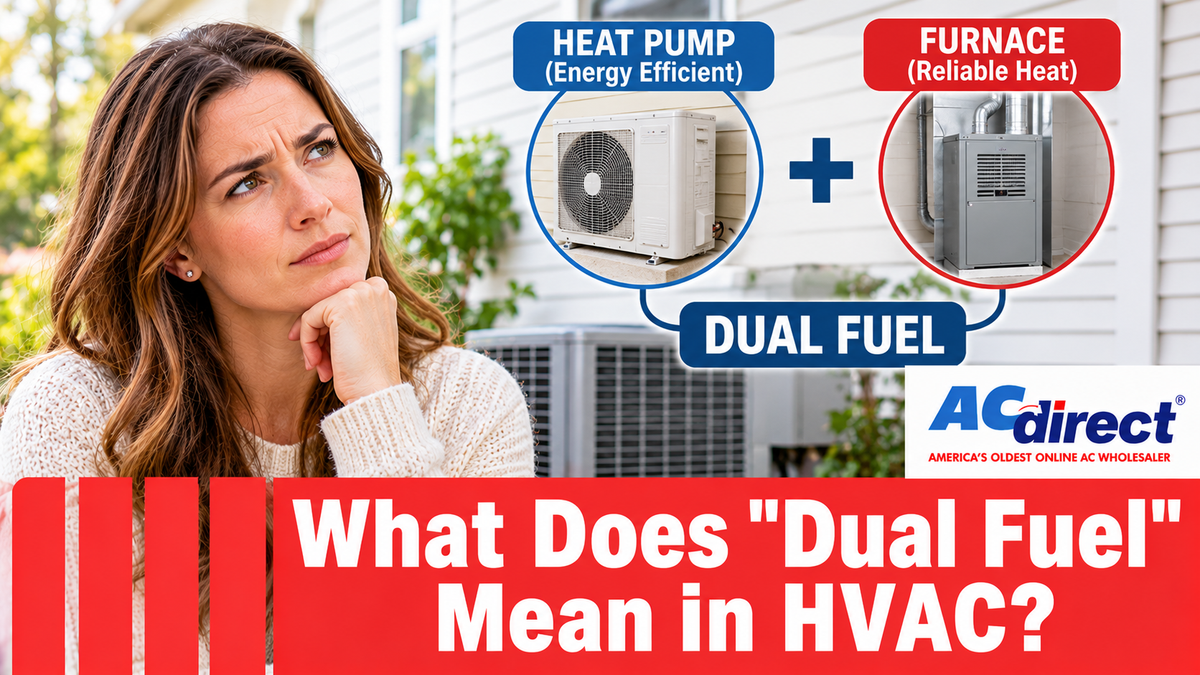
What Does "Dual Fuel" Mean in HVAC?
A heat pump and a gas furnace in one system, with a thermostat that decides which one is cheaper to run today.
A dual fuel system pairs an electric heat pump with a gas furnace in a single setup, and automatically switches between them based on the outdoor temperature. The heat pump handles cooling all summer and heating through mild and moderate cold, which is when it's cheapest to run. When the temperature drops past a set point, the system shuts the heat pump down and lets the gas furnace take over, because that's the point where gas becomes the less expensive way to make heat.
That's the short version. The reason dual fuel exists at all comes down to a simple tradeoff: heat pumps are dramatically efficient until it gets cold, and gas furnaces cost the same to run no matter what the weather does. A dual fuel system stops you from having to pick one.
The Two Pieces
Outside, there's a heat pump — which looks and installs like a standard air conditioner condenser, but can run in reverse to produce heat as well as remove it.
Inside, instead of the air handler you'd find with a heat-pump-only system, there's a gas furnace with an evaporator coil mounted in the plenum above it. Both pieces share the same ductwork and the same blower.
The whole thing runs off one dual-fuel-capable thermostat, which is what makes the arrangement work. A standard thermostat can't manage the handoff. It needs to know which heat source to call for, and it needs to know never to run both at the same time.
Why Not Just Run One or the Other?
Heat pumps don't create heat. They move it, pulling warmth out of outdoor air and delivering it indoors. That's why a heat pump can put out more heating energy than the electrical energy it consumes — ENERGY STAR notes that air source heat pumps can deliver one and a half to three times more heat energy than the electricity they use. A gas furnace, by contrast, tops out at whatever its AFUE rating says: a high-efficiency condensing furnace converts around 95 to 98 percent of its fuel into heat, and it physically can't do better than 100.
The catch is that heat pumps get less effective as it gets colder. There's less heat in 20-degree air than in 45-degree air, so the system works harder for less output, and its efficiency slides. Somewhere along that slide, the cost per unit of heat from the heat pump crosses above the cost per unit of heat from the furnace.
The Switchover Point
That temperature is called the balance point, switchover point, or crossover temperature depending on who's talking, and it's usually set somewhere between 30 and 40°F.
Where exactly it lands depends on three things: what you pay for electricity, what you pay for natural gas or propane, and how well your specific heat pump performs in the cold. Cheap gas and expensive electricity push the setting higher, so the furnace does more of the work. Cheap electricity, expensive propane, or a cold-climate heat pump that holds its capacity into the teens push it lower.
One Rule: Never Both at Once
Dual fuel systems are designed so the heat pump and furnace never run simultaneously, and the controls lock this out.
When Dual Fuel Makes Sense
- Cold climates with an existing gas line. The colder the winter, the more the furnace earns its place, and the more the shoulder seasons let the heat pump save you money.
- An aging AC but a decent furnace. Replacing just the outdoor unit with a heat pump turns an existing furnace into half of a dual fuel system. Sometimes called an add-on heat pump, and it's the cheapest path in.
- Propane or oil heat. Propane is expensive per BTU, so shifting most of the heating season onto a heat pump can cut a fuel bill substantially, even though the furnace is still there for the coldest stretches.
- You want a backup heat source. Two independent heating methods on separate utilities is real redundancy during an outage or a cold snap.
When It Doesn't
- Mild climates. If your winter rarely drops below the balance point, the furnace sits idle and you paid for equipment you don't use. A straight heat pump is simpler and cheaper.
- All-electric homes with no gas service. Running a new gas line for a dual fuel install rarely pencils out. A cold-climate heat pump with electric backup heat is usually the better answer.
- Homes without ductwork. Dual fuel needs ducts. If your home doesn't have them, a ductless mini-split is the comparable option.
- Very cheap electricity. In some regions the math never favors gas, and the heat pump should simply run all winter.
Dual Fuel vs. Hybrid Heat vs. Heat Pump With Backup Heat
"Dual fuel" and "hybrid heat" mean the same thing — the second is mostly manufacturer branding. What's genuinely different is the third one.
| Term | What it actually means |
|---|---|
| Dual fuel | A heat pump paired with a gas or propane furnace, switching between them on outdoor temperature. |
| Hybrid heat | The same thing. Mostly manufacturer branding. |
| Heat pump with electric backup | A heat pump with electric resistance heat strips instead of a furnace. Legitimate, but resistance heat is the most expensive way to heat a house — the strips are meant for defrost cycles and deep cold, not the whole season. |
Dual fuel replaces that expensive electric backup with a cheaper one.
What to Check Before You Buy
Dual fuel only works if the pieces are designed to work together. A few things worth confirming:
- Matched, AHRI-certified equipment. The heat pump, coil and furnace should appear together as a rated combination in the AHRI Directory. Unmatched pairings won't hit their published efficiency numbers and can complicate warranty and rebate claims.
- A thermostat that supports dual fuel. Some manage switchover with an outdoor sensor, some use the thermostat's own logic, and some rely on a separate outdoor thermostat control. They are not interchangeable.
- Furnace blower compatibility. Heat pumps generally need more airflow than furnaces do. A variable-speed blower handles both comfortably; an older single-speed furnace may not move enough air for the heat pump to perform properly.
- Rebates. Heat pump incentives from utilities and federal programs often apply to the heat pump portion of a dual fuel install. Check what's current before you commit to equipment.
Frequently Asked Questions
Is dual fuel the same as a hybrid system?
Yes. Manufacturers use both terms for the same heat-pump-plus-furnace arrangement.
Can I add a heat pump to my existing furnace?
Usually, if the furnace is in good shape and the blower can move enough air. You'd replace the outdoor AC condenser with a heat pump, add a compatible thermostat, and have the control wiring reconfigured. This is the most common way people end up with dual fuel.
Does dual fuel cool differently than regular AC?
No. In cooling mode a heat pump is an air conditioner - the furnace stays out of it entirely and only the blower runs.
How do I know which one is running?
Most dual fuel thermostats display the active heat source. Outside, you can also just listen: if the outdoor unit is running on a cold day, the heat pump is doing the work.
Is dual fuel more expensive to install?
Somewhat, compared with a furnace-and-AC pairing, because a heat pump costs more than a comparable condenser and the thermostat and controls are more involved. The payback comes from the shoulder seasons, when the heat pump is doing the heating at a fraction of what gas costs.
Comparing options? Browse our dual fuel hybrid heat pump systems, or shop heat pumps, gas furnaces and complete system packages from Goodman, Daikin and more.


